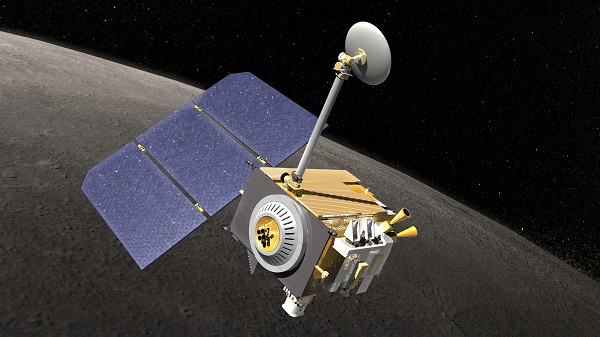
Astronomers were able to spot two lost lunar spaceships by using NASA’s radar technique.
NASA radar technique helped at finding a lost lunar spacecraft. This represented a technological challenge, being pretty hard to determine space detritus or lost spaceship in the orbit of our planet. But thanks to this revolutionary technology, astronomers made it. Moreover, it is even harder to detect such object in the orbit of the Moon because optical telescopes are not accurate enough to spot small objects which float around in the bright light of the moon.
- Astronomers were able to spot two lost lunar spacecrafts through a new radar technique.
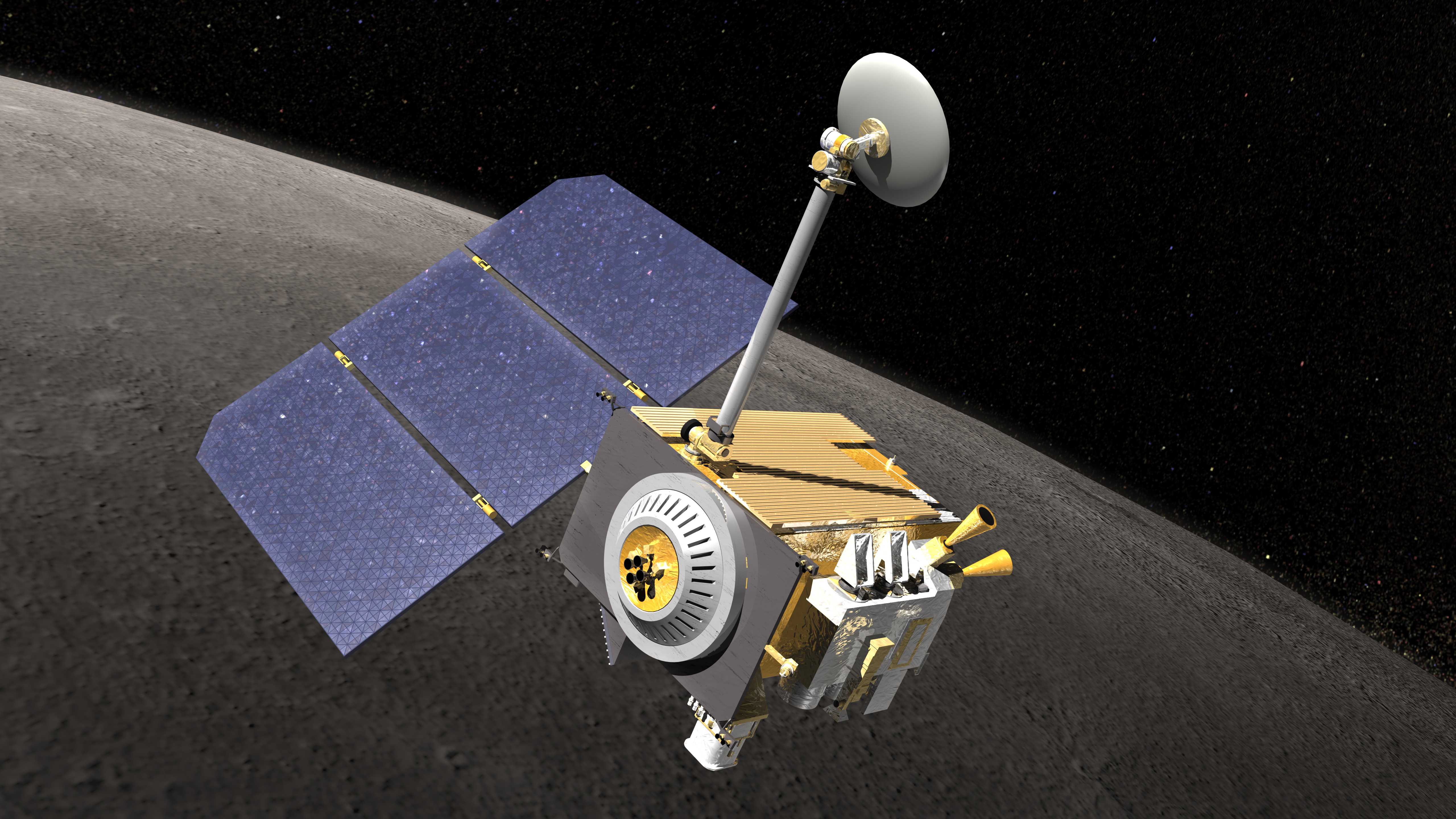
- They detected the Lunar Reconnaissance Orbiter and the Chandrayaan-1 spaceship.
- It was easier for them to spot LRO because they were working with its navigators.
Nevertheless, this new technological application of interplanetary radar developed by scientists at NASA’s Jet Propulsion Laboratory in Pasadena, California managed to locate a spaceship floating around the moon successfully. The newly developed technology might be extremely useful for future moon missions. Marina Brozovic, a radar scientist at the Jet Propulsion Laboratory, claimed that they were able to track the Lunar Reconnaissance Orbiter and also the Indian Space Research Organization’s Chandrayaan-1 spaceship.
They were both orbiting the moon. Apparently, it was easy for the new radar technology to detect LRO because astronomers were working with the navigators of the spacecraft and, thus, they had the correct orbit data where it was located. However, it was rather difficult to find Chandrayaan-1 spaceship which requested for more attention and detective work because the last contact with it was back in August 2009.
Moreover, Chandrayaan-1 is a small spaceship, being a cube of approximately five feet on each side. The interplanetary radar was designed to detect and analyze small asteroids located several million miles from our planet, but scientists did not expect it to be able to spot such a small spaceship in the orbit of the moon. All interplanetary radars use microwaves, but not all of them are developed equally. Spotting Chandrayaan-1 spacecraft demonstrated the capability of the new radar technique.
For instance, the usual police radar device has an operational range of approximately one mile. An air traffic control radar is bound to reach even sixty miles. Nevertheless, to track a spaceship situated at about 237,000 miles away, the team from JPL used NASA’s 230-foot antenna at NASA’s Goldstone Deep Space Communications Complex in California. This antenna sent out a beam of microwaves which reached the moon and then the radar echoes bounced back from the orbit of the moon, being intercepted by the Green Bank Telescope in West Virginia.
Image courtesy of: wikipedia

Leave a Reply
You must be logged in to post a comment.